.png)
Once upon a time, success in business was measured in square feet. The bigger the office, the bigger the ego. A corner suite meant you’d made it. The view was your validation.
But somewhere between the dot-com crash and the post-COVID hybrid work reality, something shifted. Companies realized they didn’t need more space — they needed smarter space. As Bob Dylan put it, “The times, they are a-changin’.”
Now, the smartest firms are asking a very different question:
What story does our real estate tell about who we are becoming?
The pandemic didn’t invent change; it just hit “fast-forward.” U.S. office vacancy hit 21% this year, the highest on record. But that doesn’t mean the office is dead; it means the old office is. The modern workplace isn’t a monument, it’s a message. It says: “We’re adaptable. We move fast. We know who we are.”
At BellCornerstone, we’ve helped transform many press buildings that once printed a city’s news. Now that same real estate powers regional logistics hubs, ambulatory surgery centers, movie production studios, charter schools, biotech labs … you name it. Spaces once humming with presses now hum with server farms. The use may have changed, but its impact hasn’t. The real estate didn’t lose relevance; it just needed a new storyline. The best assets are no longer the biggest, or even the nicest, but rather the ones that evolve to meet the market fastest.
Think of it like music. Some buildings are one-hit wonders; others reinvent themselves every decade, like The Rolling Stones and U2.
Today’s best portfolios aren’t defined by size or location; they’re defined by philosophy. Flexibility beats formality. Creativity trumps square footage. Design and layout feed culture. As Peter Drucker says, “Culture eats strategy for breakfast.”
So, what does that mean for owners and investors?
It means real estate is no longer just a static line item on the balance sheet; it’s become both an opportunity and a living brand statement about your company. The space you occupy speaks louder than your press release. Is it innovative or inert? Collaborative or compartmentalized? Inspiring or invisible? Every hallway, every conference room, every loading dock tells the truth about your culture.
We once treated buildings like boxes. Today, we know they’re mirrors. They reflect what an organization values most. The new measure of success isn’t cost per square foot; it’s value per square foot.
And maybe that’s a good thing. Maybe real estate needed to rediscover its soul. The size of the office was never the point, the people were.
As one CEO told me recently, half-jokingly: “We used to lease for prestige; now we lease for purpose. Turns out purpose is cheaper, and it looks better on camera.”
And that’s really the story here. Real estate has evolved from a cost center to a cultural compass. It’s not about having space; it’s about using space to say something that matters.
Real estate markets shift, and they always will. The winners won’t be the ones with the most square feet, but the ones who move the fastest, think the boldest, and adapt the quickest.
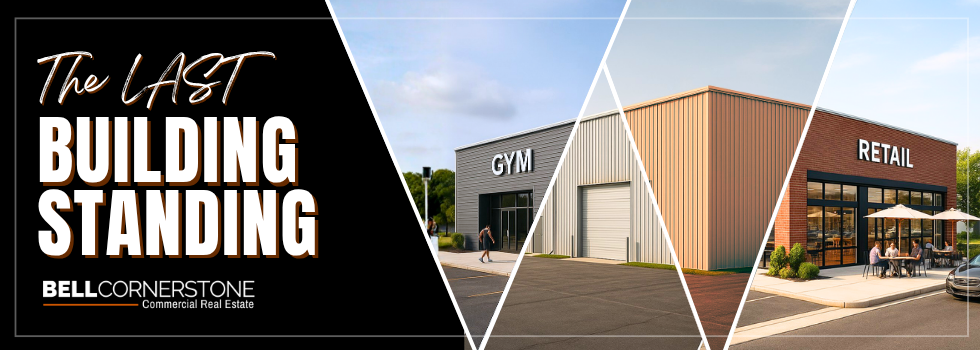
At BellCornerstone, we’ve learned this firsthand: the last buildings standing won’t be the biggest or the newest, they’ll be the ones with a reimagined future built into their foundation.
In the end, the smartest companies aren’t chasing space, they’re using space to design tomorrow.


Brian Rossi is Chief Operating Officer of BellCornerstone, a national commercial real estate firm specializing in tenant representation, property disposition, and portfolio strategy. Contact Brian at 315-935-3162 or brossi@bellcornerstone.com to learn more.
This article appeared in America's Newspapers: